UX Case Study
Your Name
Beginner and intermediate lifters often struggle to make consistent progress because they do not consistently track their workouts, and even when they do, they are not always sure how to use that information to decide what to do next.
Objectives & Goals
Make workout tracking simple by using each user’s workout history and feedback to provide clear guidance on what to do next.
Help beginner and intermediate lifters build a habit in the gym, stay consistent, and make measurable progress over time.
My Process

Discover

Define

Ideate

Design
KEY DESIGN CHALLENGES
Make workout tracking quick and not intimidating for beginners.
Provide useful progression guidance without overwhelming users.
Help users stay motivated by making consistency and improvement visible.
Competitive Analysis
Competitor 1 (FITBOD)
Strength/Weakness
Makes workout planning convenient and removes much of the guesswork.
Recommendations can feel repetitive or unrealistic, and users have limited control over progression.


An all-in-one transformation program combining workouts, nutrition, coaching, and progress tracking.
Competitor 2 (XEELA)
Strength/Weakness
Provides a complete, guided fitness system in one place.
Prescribed plans, equipment requirements, and paywalls limit flexibility for users.
Competitor 3 (Boostcamp)
A strength-training app packed with workout programs, tracking tools, analytics, coaching, and customization features.
Strength/Weakness
Offers a large variety of programs and training features
Tries to do too much, creating a cluttered experience that can make progress feel harder to understand

User Interviews
I screened 15 friends, family members, and referrals to understand their experiences with fitness and gym-based training.
I selected six participants for Zoom interviews: two beginners, three people returning to the gym, and one Division I athlete.
The interviews explored workout habits, motivation, confidence, progression, and the challenges participants experienced when training independently.
AFFINITY MAPPING
After reviewing my interview notes, I grouped similar observations to identify patterns across participants.
RECURRING THEMES
5 OF 6
Expressed uncertainty about how to progress or what to do during their workouts.
5 OF 6
Defined workout success through personal indicators such as soreness, sweating, consistency, or visible progress.
4 OF 6
Said that having a routine or structured workout made exercising feel easier and more manageable.
4 OF 6
Said that accountability, motivation, or enjoyment influenced whether they stayed consistent.
User Needs
Clear indicators that show whether a workout was productive and contributing to progress.
Simple guidance on when to increase weight, add repetitions, or maintain the same approach.
Structured workout plans that reduce uncertainty and make each session easier to begin.
Visible progress, encouragement, and accountability that help users remain consistent.
User Persona

Jason
Beginner Lifter
About
20 y/o
New York
Bachelors
Student
Description
Jason wants to build muscle and stay consistent, but often second-guesses his workouts and doesn’t know when or how to progress.
Needs
Clear direction on what to do and when to progress.
Confidence that his workouts are helping him improve.
A simple way to track his effort and progress over time.
Pain Points
Doesn’t know whether he is doing the right exercises or doing enough.
Becomes overwhelmed when presented with too many choices.
Has trouble tracking progress and knowing what to change next.
“I want to be consistent, but I don’t always know what to do.”
User Flow
End-to-End experience

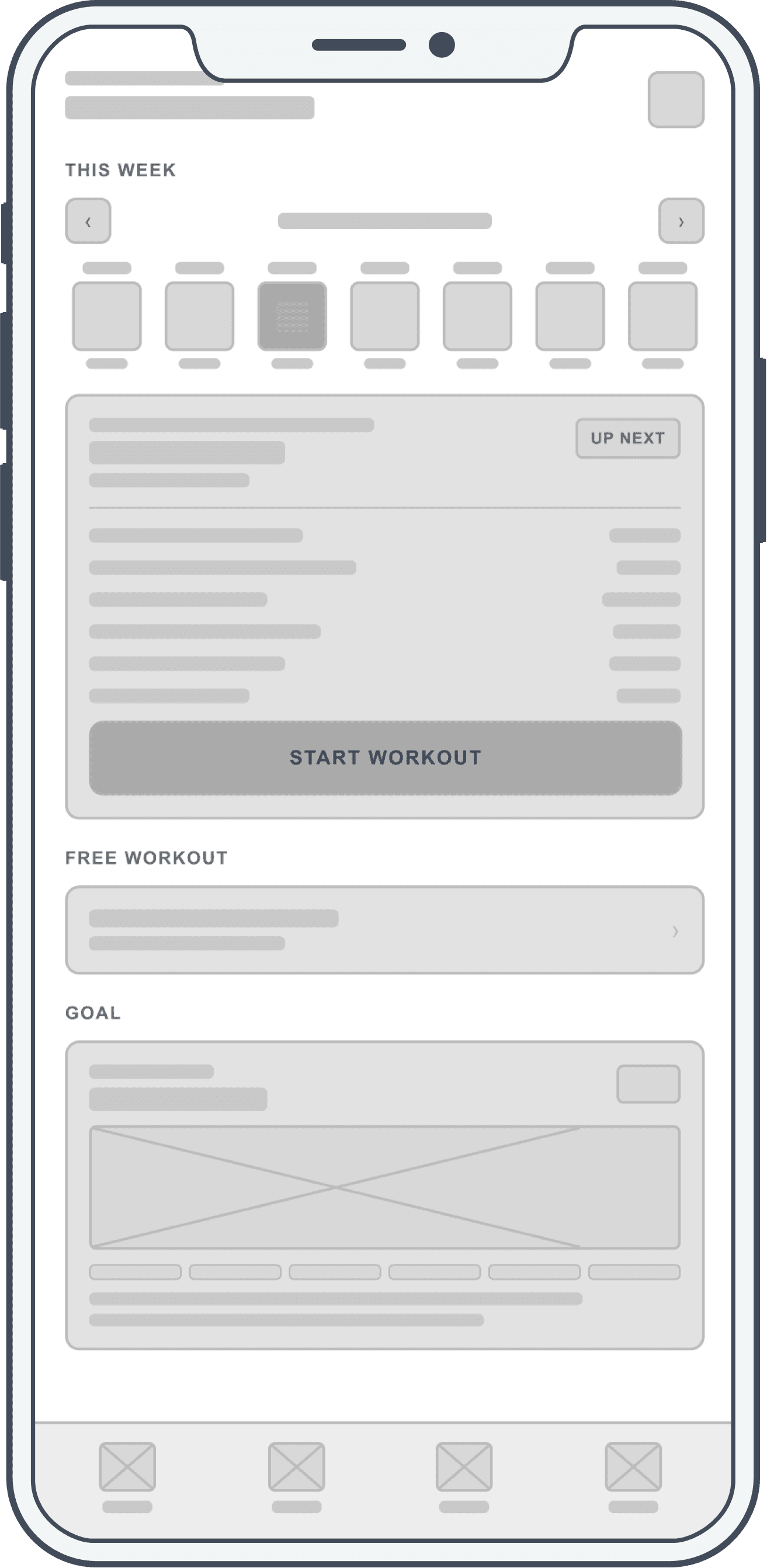
WIREFRAMES




USABILITY TESTING PLAN
GOAL: Evaluate whether users could complete onboarding, begin a workout, log exercises, record workout difficulty, and understand their progress without assistance.
PARTICIPANTS: Users with different levels of workout experience, including participants from the original screener survey.
TESTING METHOD: Moderated sessions using an interactive prototype. Participants completed realistic tasks while thinking aloud.
CORE TASKS: Complete onboarding, begin today’s workout, log a set, record a difficult set, and find and interpret workout progress.
USABILITY TESTING: KEY FINDINGS
Testing revealed four areas where the experience needed to be clearer and more flexible.
KEY FINDINGS
HOME SCREEN
“Start Workout” felt too immediate. Users wanted to review the workout first, and “Free Workout” was unclear.
ONBOARDING
Equipment-access questions and workout terminology confused beginners. Users also expected to select multiple fitness goals.
VISUAL CLARITY
Users mentioned how difficult it was to make out some component - some colors were blending in with each other
PROGRESS TRACKING
Users wanted to manually log measurements, review them over time, and connect progress to their selected goals.
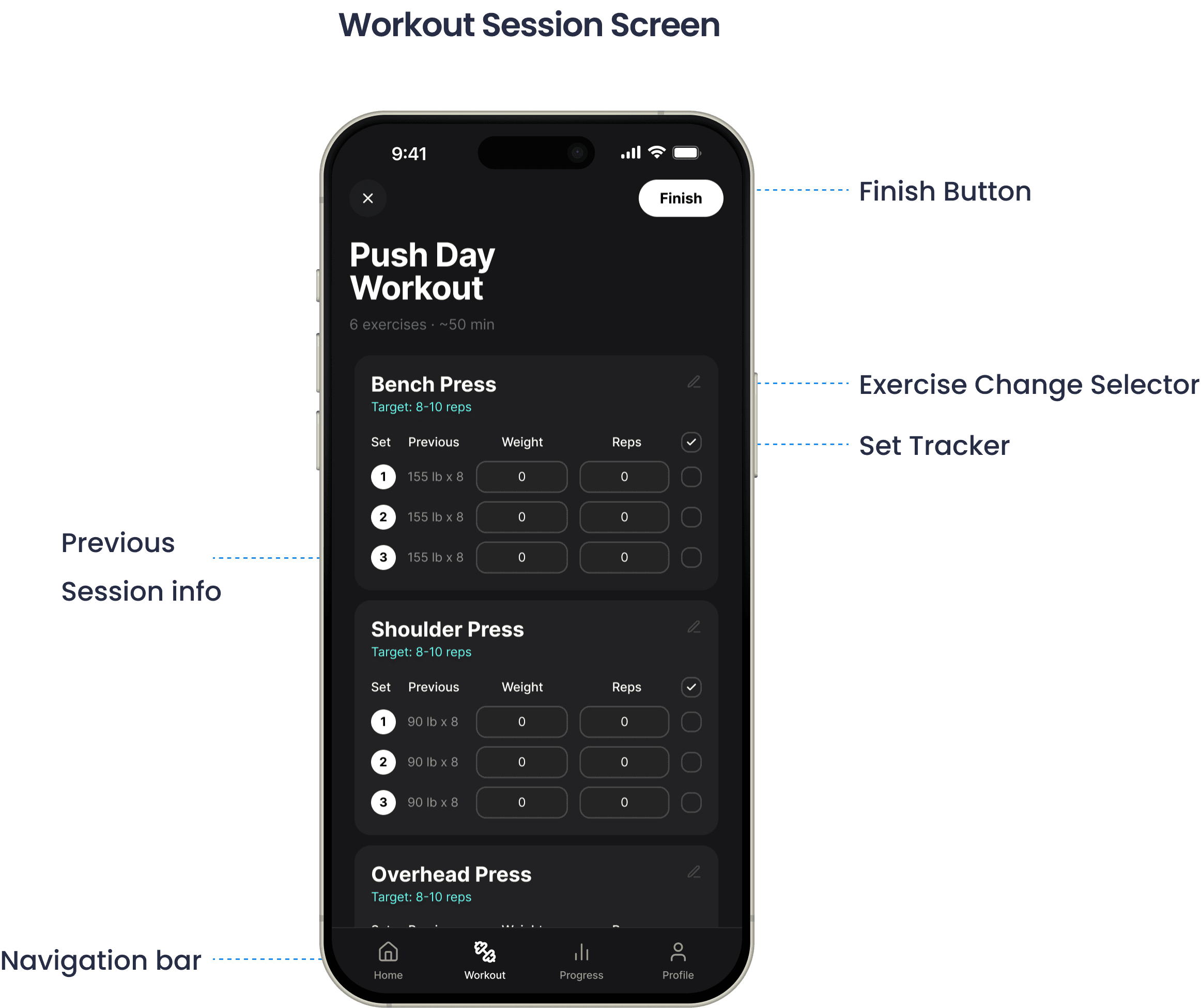
Major Screens


Screens

Onboarding

Onboarding
Onboarding

Home Page

Workout menu

Workout Session
(RPE Scale Included)

Data

Workout Session
Thank You